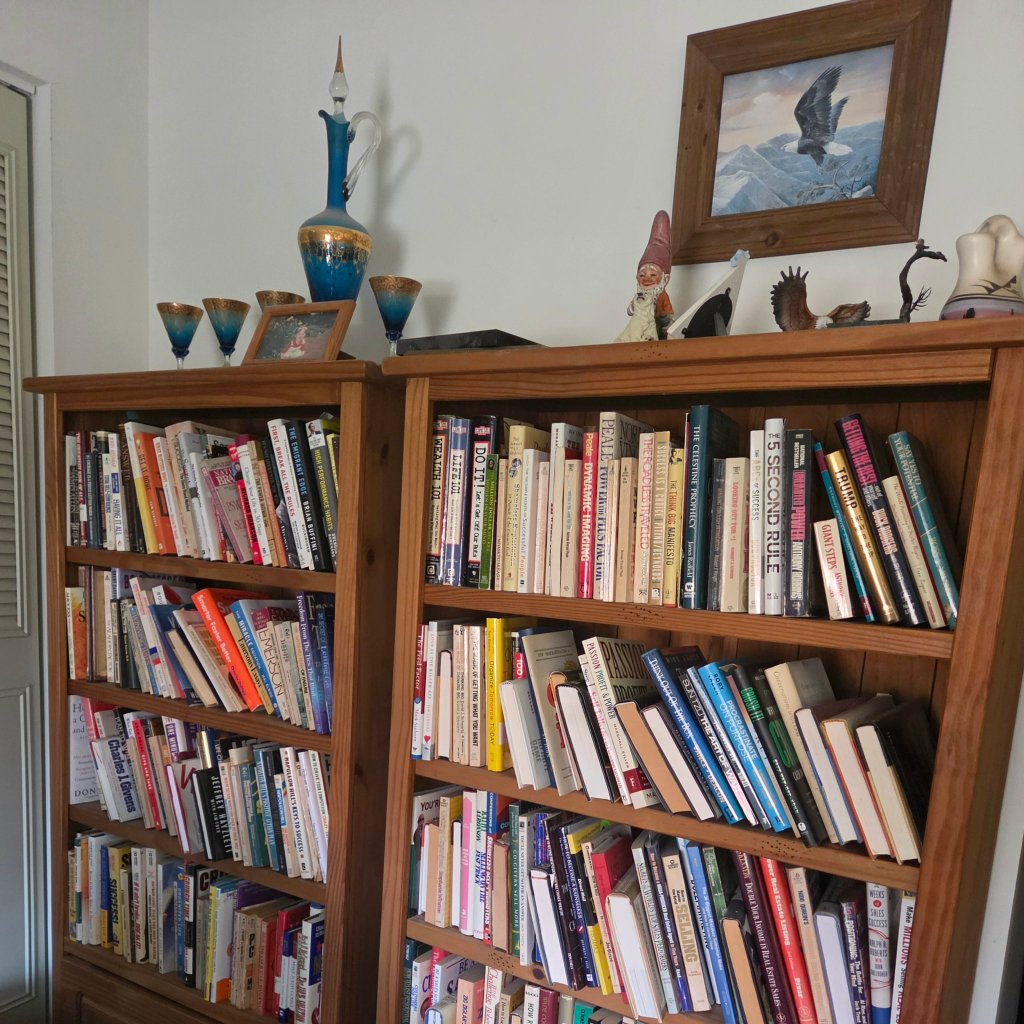
I think Charles “Tremendous” Jones would have liked me. I read … a lot. When I was young, I read everything that I could grab: cereal boxes, product packages, ads that came in the mail. Later I would beg my parents for Little Golden Books. I don’t know where this desire came from. No one ever encouraged me to read. I never once saw my father pick up a book. My mother would purchase a magazine occasionally, usually because it had a picture on the cover of a meal she would like to try and she wanted the recipe.
When I got to school there were textbooks to read, and I did what I had to, but I was fascinated by history, or what they called social studies at the time. I read about the rise and fall of civilizations, the Babylonians and Assyrians, the Aztecs and the Incas.
When I started work as an engineer, I read about the engineering marvels of the age, the Mackinac Bridge and the Hoover Dam. When I entered construction, I read about the Panama Canal and the Interstate Highway System. My reading followed my work. When I got divorced everything changed.
My divorce was a crushing blow to my self-esteem, my feelings of self-worth. Then one Sunday morning I discovered Dr. Robert Schuler’s television program, Hour of Power. I was hooked on his message of Possibility Thinking. I started reading his books and then followed up with books by Earl Nightingale, Robert Collier, Napoleon Hill, and Brian Tracy. Schuler taught me that defeat was not permanent unless I allowed it to be so. Collier taught me to have faith in myself, that I was born to shine. Nightingale and Hill taught me that anything I believed in was possible, that I could achieve whatever I conceived and believed. Tracy taught me to turn dreams into goals into plans, break them into steps and accomplish them.
My reading topics have expanded since then.
Bernie Madoff, in a book called The Wizard of Lies, was a financier who created an investment program that attracted millions of dollars from hundreds of investors. When it was uncovered that the program was a fraud, an elaborate Ponzi scheme, Madoff was sent to prison. On the second anniversary of his father’s arrest, Madoff’s son, hounded by creditors, committed suicide.
Benjamin Graham wrote four editions of his book, The Intelligent Investor. Warren Buffett read them all and kept a copy of each of them on his desk and referred to them frequently. He was an avid reader, reading as much as six hours a day. He never assumed he knew everything. By being willing to continue learning, he became one of the wealthiest people in the world. Bill Gates reportedly reads about 50 books a year. He has a room in his home set up as a library where he can read, study, and plan.
In The Autobiography of Benjamin Franklin (which he called Memoirs) he stated that there were 13 character traits or virtues he wished to incorporate into his life. Franklin wrote his 13 virtues in a little journal and worked on one virtue a week, monitoring his successes and failures, and recording them in his journal each day. Clear’s program in Atomic Habits is essentially the same idea — track and make small improvements daily. I don’t try to do everything at once. I work on one at a time. Two books more than two centuries apart and the message hasn’t changed. It might be wise to listen, and remember the old Russian proverb, “He who chases two rabbits catches neither.”
In Changing Your Course, Bob and Melinda Blanchard tell the story of their desire to flee harsh New England winters, move to Anguilla, and open a restaurant, despite the fact that neither had done anything like it before. Nevertheless, they proceeded with their plan. Bob drew plans of what he wanted the building to look like. Melinda decided that they would use all local ingredients and created the menu accordingly. They worked through each obstacle and eventually opened for business. The restaurant was an instant hit. The lesson here is obvious. Their story showed me what believing in a goal can do — it can be the start of an exciting new life.
In his book, The Gambler, William Rempel describes the business feud between two billionaires, Howard Hughes and Kirk Kerkorian. When one built a new hotel in Las Vegas, the other built a larger one. Their principal difference was that Hughes sought fame while Kerkorian shunned it.
In 1903 the United States government picked Samuel Langley, a renowned scientist, to develop a heavier-than-air flying machine. He had almost unlimited financing and access to the best engineers of the day. With great fanfare there were two launch attempts, both spectacular failures. Meanwhile at Kitty Hawk, Wilbur and Orville Wright, two bicycle mechanics from Dayton, Ohio, made history. The difference between them: Langley wanted to be famous, the Wright brothers wanted to fly. Our motive is important. Our motive can either strengthen or weaken our effort.
I guess I have come full circle now. I have learned to become happy with what I have done, grateful for what I have received, and to no longer regret what I have missed. I still love books and seek to acquire new information and to reach for new goals. I will live the life that I continue creating for myself. And I’m having fun. I believe that is what life is supposed to be.
What book gave you the one idea that changed something for you — and have you gone back and read it again since?
What’s sitting on your shelf right now that you already know you need to reread?

Leave a Reply